An estimated 85% of American homes have hard water—that is water with high levels of calcium and magnesium ions.
That means most households are dealing with mineral buildup, scale, and reduced effectiveness of soaps and appliances without even realizing it. In this article we’ll explain what a whole house water softener is, how a water softener works, the benefits of water softeners, and whether installing one in your home makes sense.
What Is Hard Water & Why It Matters
Hard water isn’t harmful to drink, but the effects show up in many everyday ways. Over time minerals in hard water build up inside pipes, clog fixtures, reduce water flow, damage heating elements, scale up dishwashers or washing machines, leave spots and film on glass and dishes, and even make soaps and shampoos less effective.
Water hardness is usually measured in grains per gallon (gpg) or milligrams per liter (mg/L). According to USGS guidelines, water with 0-60 mg/L of calcium carbonate is considered soft, 61-120 moderate hardness, 121-180 hard, and above that very hard. Knowing your water hardness is the first step in deciding if you need treatment.
How a Whole House Water Softener Works
A whole house water softener treats all water entering your home—from showers, faucets, washing machines, kitchen sink, etc—not just one faucet or point-of-use. Here is how it typically functions:
- Ion Exchange Process
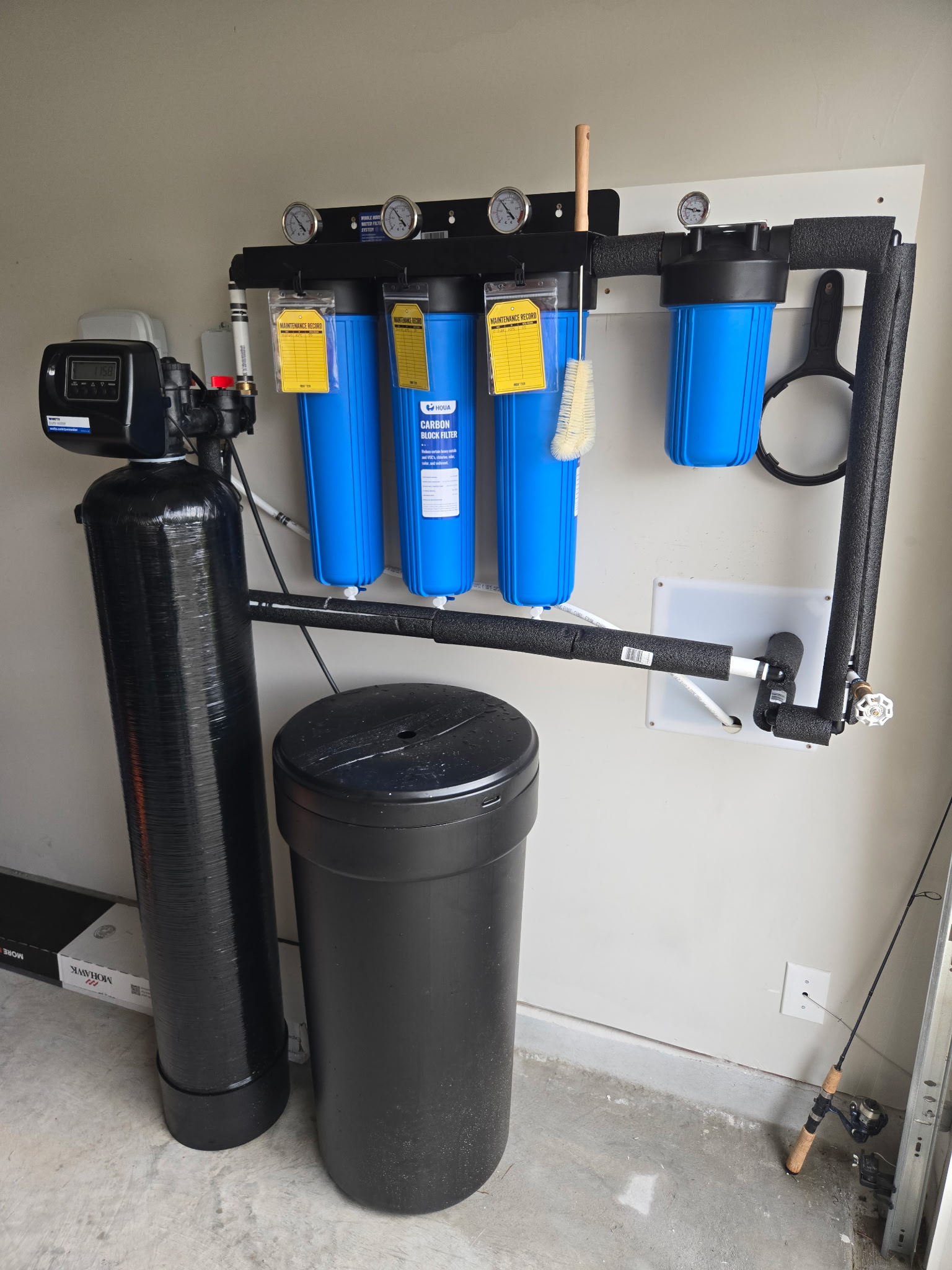
This is the most common method. Hard water passes through a tank full of resin beads charged with sodium or potassium ions. The calcium and magnesium in the water “swap places” with these softer ions. The hard minerals are trapped in the resin, the softer ions go into your water supply. - Regeneration Cycle
Over time the resin becomes saturated with calcium and magnesium. The system enters regeneration: a brine solution flushes through, rinses out the collected minerals, recharges the resin with sodium (or potassium), and flushes away the waste. - Control Valve / Metering
Modern systems often use demand-initiated regeneration: the softener tracks how much water you use and only regenerates when needed. That saves salt, water, and energy compared to timer-based regeneration. - Bypass / Mixing Valve (Optional Features)
Some systems allow you to bypass the softening system entirely (for example for outdoor hoses), or to mix in some untreated water if needed (perhaps for gardening or for people on low sodium diets).
Benefits of Water Softeners
When you install a whole house water softener, the advantages go beyond just “less scale.” Here are key benefits:
- Longer Lifespan of Appliances and Plumbing: Reduced scale on heating elements, pipes, faucets, water heaters, dishwashers, washing machines means less wear and breakdowns.
- Improved Efficiency: Softer water heats more efficiently, allows detergents, soaps, shampoos to work better. You may need less detergent, and less energy for water heating.
- Cleaner Fixtures and Surfaces: Less spotting, better glass clarity, less film on mirrors and shower doors.
- Better Skin and Hair Feel: Many users report smoother skin, less dryness, less soap residue after bathing.
- Lower Maintenance Time: Less scrubbing of scale off fixtures, less descaling of appliances, fewer plumber calls.
Do You Need One?
A whole house water softener isn’t necessary for every home. Here are factors to consider to decide if it makes sense for you:
Signs You Might Need One
- Hard water measurements over about 121 mg/L (or “hard” / “very hard” classification) in your area.
- Frequent buildup of white or chalky deposits on faucets, shower heads, or glassware.
- Appliances that use water (dishwashers, water heaters, washing machines) needing frequent repair from mineral buildup.
- Soap or detergent not lathering well, clothes fading, feeling stiff, or dishes not coming out clean.
- Dry skin or hair after bathing, more soap scum than expected.
Things to Weigh
| Factor | Why It Matters |
| Water hardness level | The harder the water, the more benefit you’ll see from a whole house water softener |
| Household size and usage | More people or more water use means you’ll need a softener with adequate capacity and more frequent regeneration |
| Cost (installation and maintenance) | Includes purchasing system, installing plumbing, recurring salt (or potassium) costs, energy and water used for regeneration |
| Health / dietary concerns | If you need very low sodium intake, traditional salt-based softeners may add sodium; alternatives or mixing untreated water may be better |
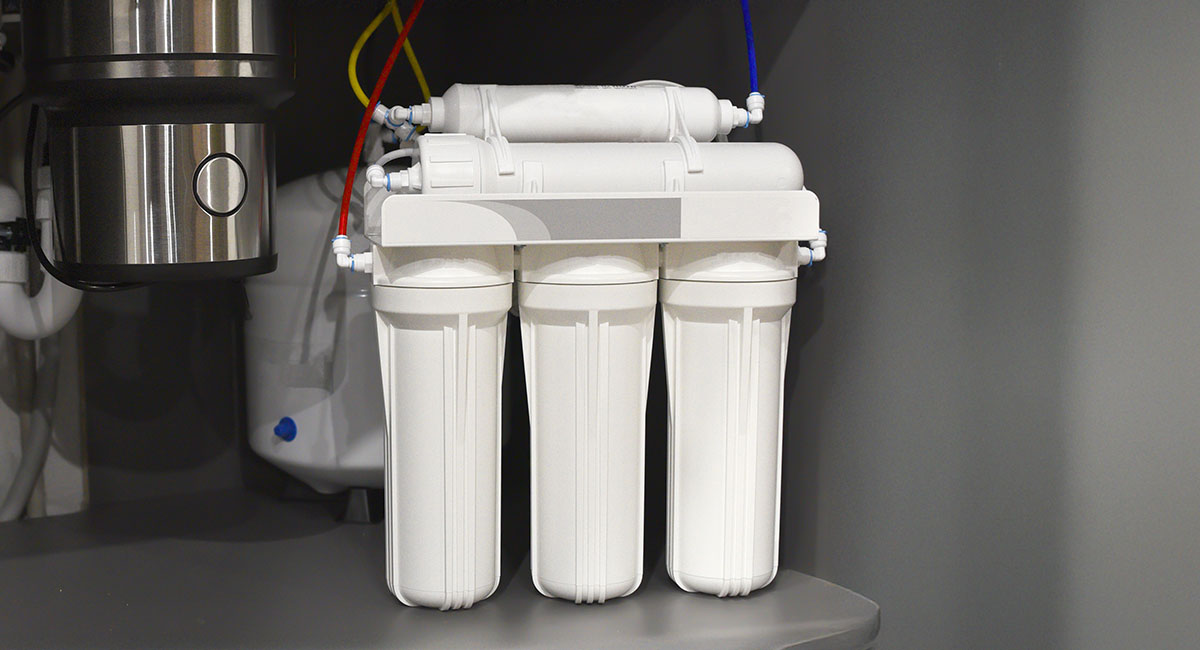
| Water quality goals | If you’re also concerned about sediment, chlorine, or other contaminants, you may need additional filtration in addition to softening |
Types & Alternatives
Not all water softeners are the same. Depending on your priorities (cost, environmental impact, maintenance, water taste), here are different kinds:
- Salt-Based Ion Exchange Softeners (most common)
- Potassium-Based Ion Exchange Softeners (less added sodium, costs tend to be higher)
- Salt-Free Water Conditioners / Descalers (these often don’t remove hard minerals but change how they behave so scale formation is reduced)
- Dual-Tank or Twin-Tank Softening Systems (better if high water usage, so regeneration is less disruptive)
Maintenance & Costs
To keep a water softener system functioning well, you’ll want to:
- Monitor and refill salt or potassium regularly
- Clean the brine tank periodically
- Check resin health (resin can degrade over many years)
- Ensure plumbing is correct and bypass valves functioning
Costs over time include the initial purchase and installation, plus salt (or potassium) and some water used in regeneration. But many homeowners recoup those costs via lower appliance repair bills, lower energy bills (because water heaters run more efficiently), and cleaner plumbing.
Potential Drawbacks & Considerations
- Added sodium: traditional salt-based softeners add sodium ions to the water. If you drink softened water, this may be a concern for people on low-sodium diets.
- Wastewater / salt discharge: regeneration produces wastewater that carries away hardness minerals and salt. Some local regulations or environmental concerns may limit usage or require certain systems.
- Upfront cost and space requirements: whole house softeners take space for tanks, resin, brine tanks, plumbing modifications.
- Water taste or feel changes: some people notice a difference (often positive) in how soft water feels or soaps lather, etc., but preferences vary.
How to Choose The Right Whole House Water Softener
Here are practical tips when selecting a system:
- Test your water hardness and know your usage (gallons per day).
- Pick a softener with enough grain capacity so that its regeneration cycle is not too frequent.
- Look for efficient, demand-initiated regeneration models to save salt, water, and energy.
- Consider whether you need additional filtration (e.g. sediment, chlorine, lead) in addition to softening.
- Check manufacturer warranty and maintenance service options.
Final Thoughts
For households dealing with hard water, a whole house water softener can offer real, long-term benefits. Understanding how water softener works, and what benefits of water softeners you might see gives you the basis for making an informed decision. While there are costs and trade-offs, the improved appliance lifespan, cleaner fixtures, better soap performance, and more comfortable bathing are often worth it for many homes.
If you’re curious what your water hardness is, or whether a softener is cost effective in your region, you can get water testing done locally or consult a water treatment professional.